The Complete Buying Guide to Manual Vegetable Chopping Tools
Walk into any kitchenware aisle and you'll find a confusing pile of "manual choppers" that all look roughly similar in photos but behave very differently once you're actually using them over a cutting board. Some are push-mechanism choppers that dice into a container. Others are cutter sets built around a grid blade for sticks and cubes. Others are flat slicers meant for even, thin cuts rather than dice.
This guide breaks down the real mechanical differences between the manual vegetable prep tools in PlastCare's range, what each one is actually good at, and the questions worth asking yourself before you add one to your cart — so you end up with a tool that matches how you actually cook, not just how it looks in a product photo.
Ready to shop this guide?
Shop the Manual Push Vegetable ChopperWhy "manual" still makes sense in 2026
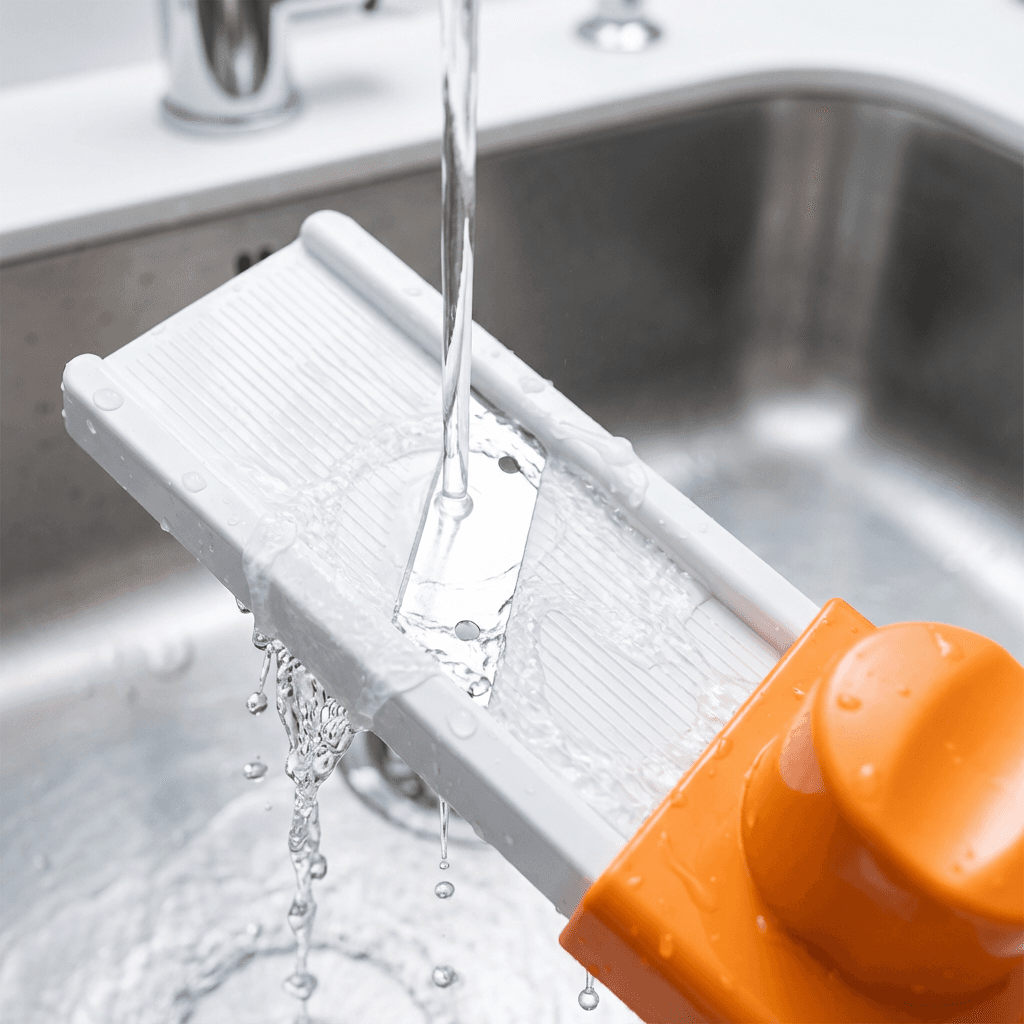
Electric choppers and food processors are powerful, but they come with real trade-offs: multiple parts to wash, a motor that needs a plug point near your countertop, and often more machine than a two-onion job actually needs. A manual chopper skips all of that. There's no cord to find a socket for, no motor to worry about burning out, and clean-up is usually a rinse under the tap.
The trade-off is that manual tools reward the right choice more than electric ones do. An electric processor is fairly forgiving of what you feed it. A manual tool works best within a narrower range of vegetables, quantities and cut styles — which is exactly why it matters to understand the different mechanisms before buying one.
The push-mechanism chopper: best for dice-style cuts
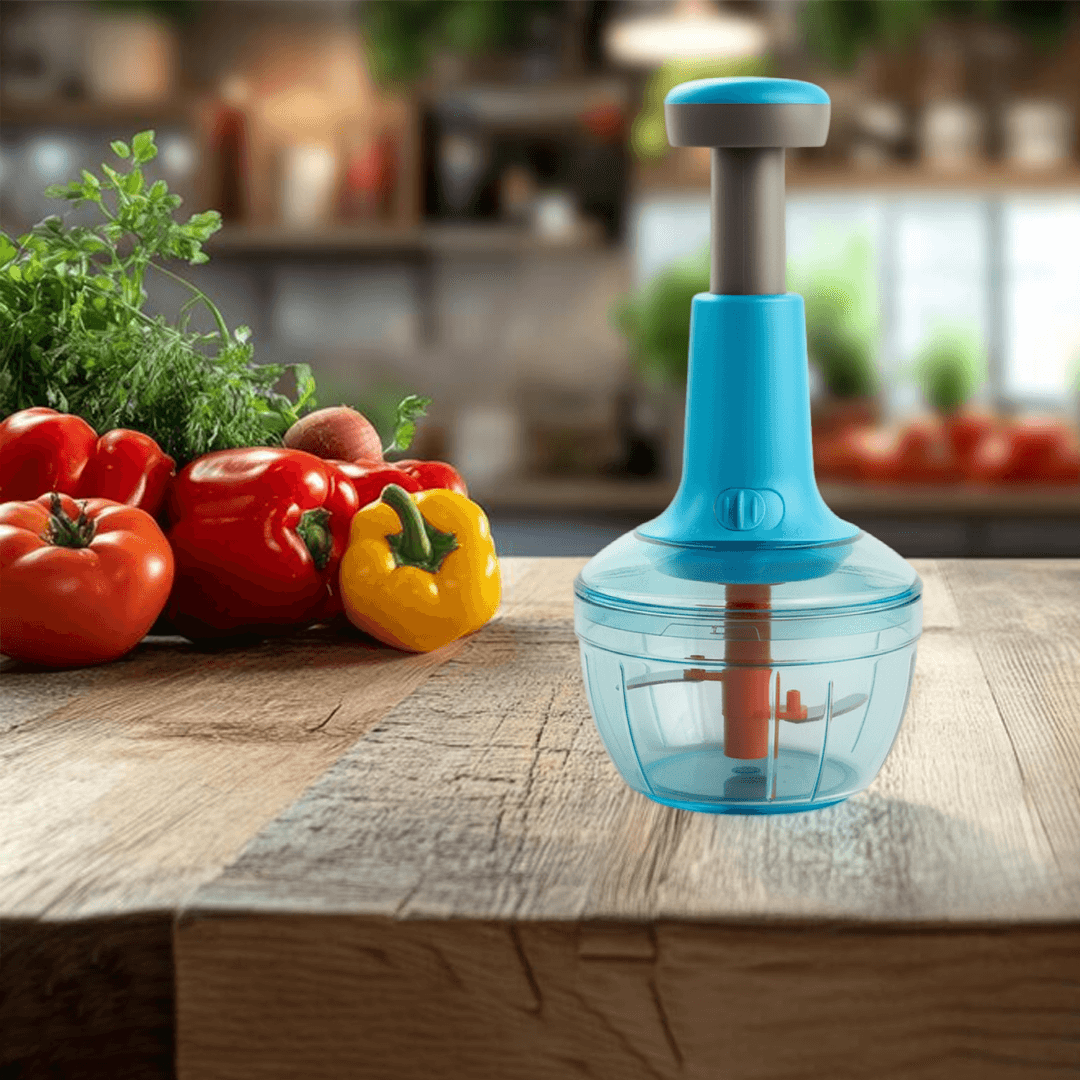
The Manual Push Vegetable Chopper uses a vertical press action — an internal rotating blade spins with each downward push, chopping vegetables inside a transparent container so you can watch the cut size as you go. This style is built for onions, tomatoes, capsicum, carrots, herbs and similar produce where you want a fairly uniform dice rather than long slices.
It's the closest manual equivalent to an electric mini-chopper, and it's the tool to reach for when a recipe calls for finely chopped aromatics — salsa, chutneys, stir-fry bases, or the onion-tomato masala base that starts most Indian curries. Because everything lands inside an enclosed container, it also tends to keep juice and mess contained better than a knife and board.
The grid-blade cutter: best for sticks and cubes
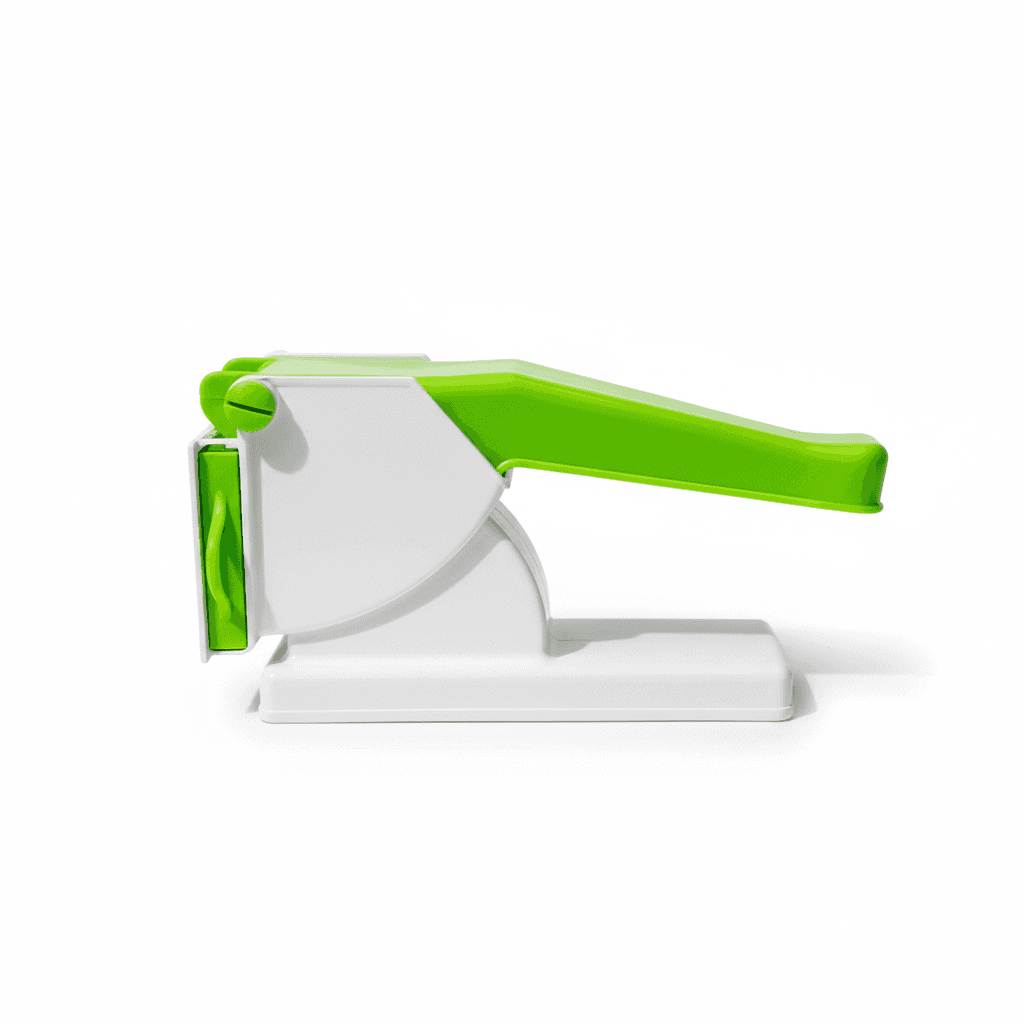
A different mechanism altogether is the grid blade cutter, used in the Manual Potato Cutter / French Fries Maker. Instead of chopping, it pushes the vegetable through a square stainless-steel grid using a lever handle, producing evenly sized sticks in a single motion. This is the tool for French fries, but it works equally well on carrots, cucumbers and other firm produce that you want cut into uniform batons rather than dice.
If your kitchen makes fries, wedges, or stick-cut vegetables for stir-fries reasonably often, a grid cutter earns its counter space quickly — it's genuinely faster than knife-cutting a consistent stick shape by hand, and the compact base keeps it stable during use.
Slicers and peelers: for even, thin cuts
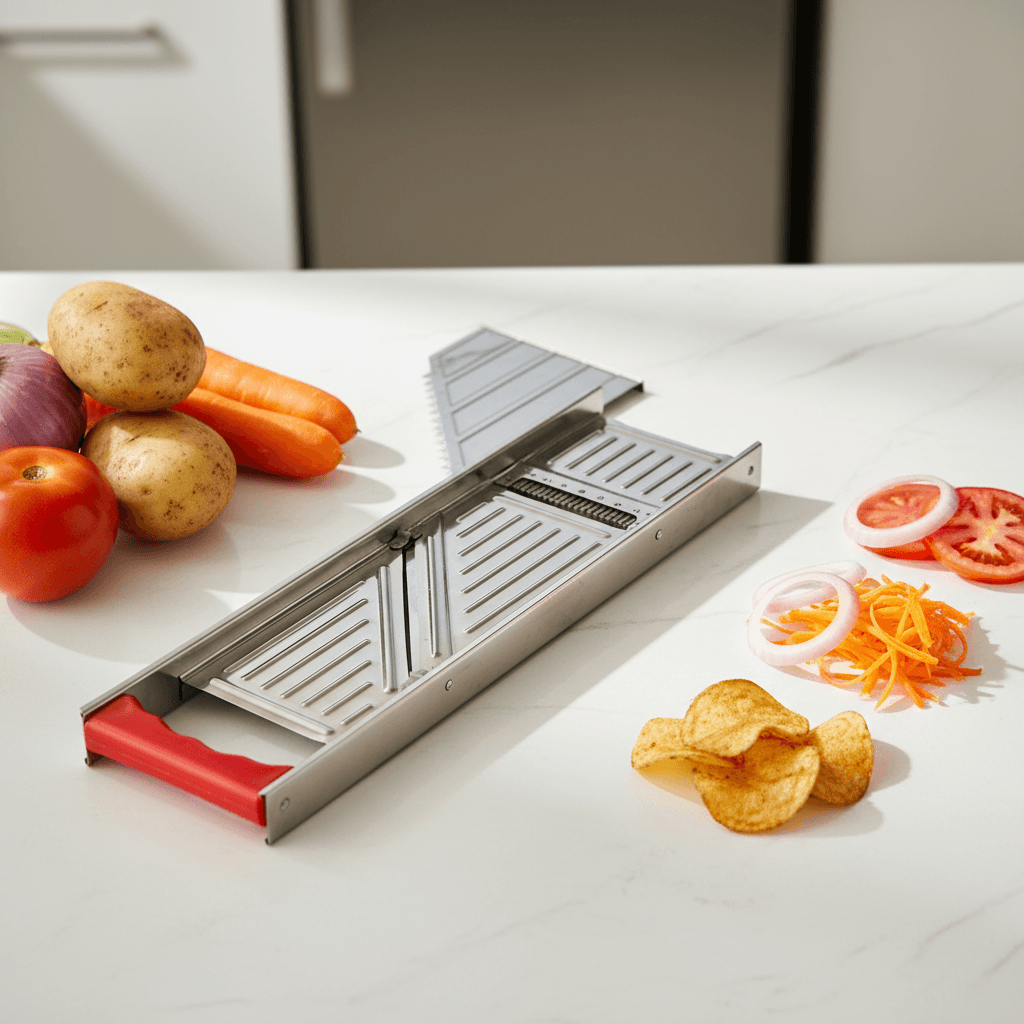
Where choppers dice and grid cutters produce sticks, a flat slicer is built for uniform thin slices — the kind you want for salads, chip-style snacks, or garnishing. The Multipurpose Stainless Steel Slicer with Holder & Julienne Blade adds a second cutting profile: a julienne blade for fine matchstick shreds, alongside the standard slicing surface, with a safety holder to keep fingers clear of the blade on smaller pieces.
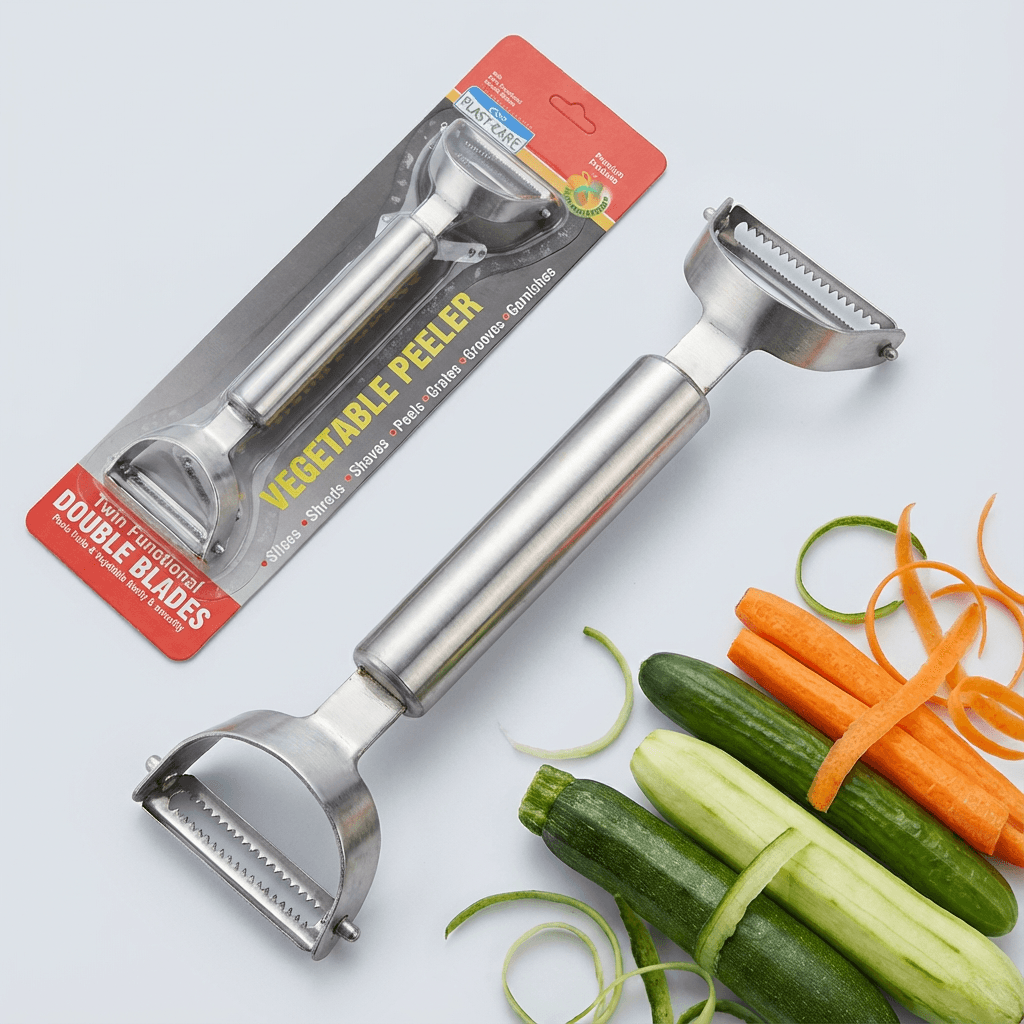
A separate but related tool is the vegetable peeler. The Multifunctional Stainless Steel Vegetable Peeler uses a twin double-blade design so it maintains contact with curved surfaces without clogging, which matters more than it sounds like it should when you're peeling a kilo of potatoes for a family meal rather than one at a time.
All-in-one kitchen sets vs. buying tools individually
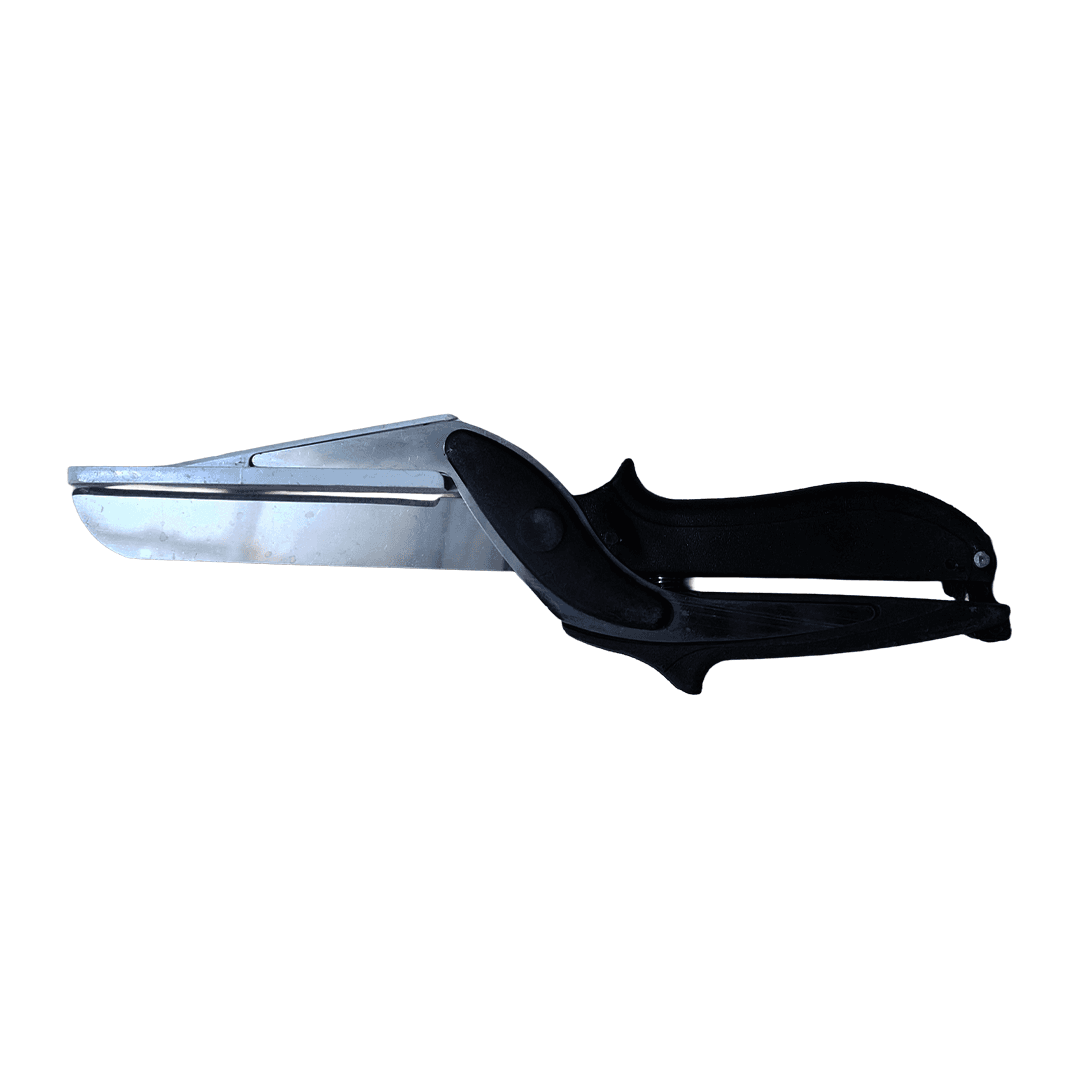
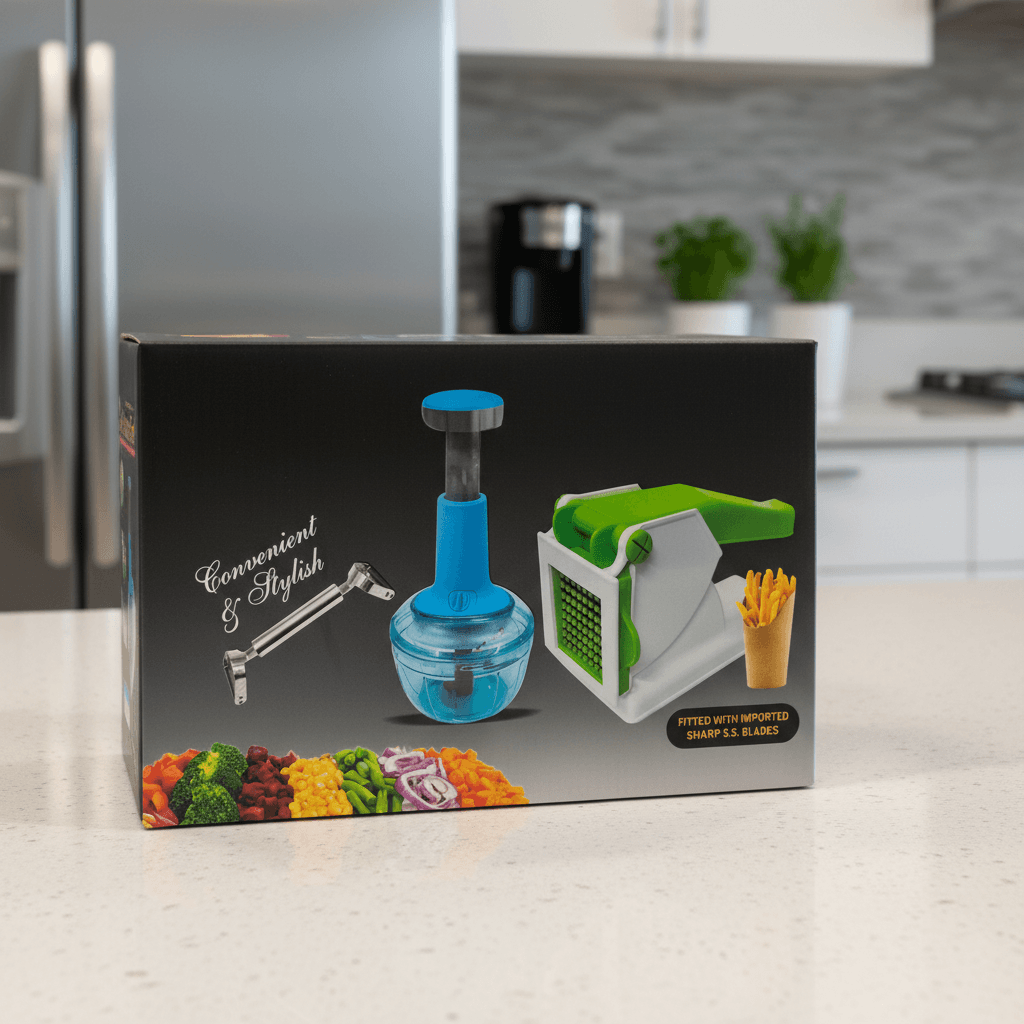
If you're setting up prep tools from scratch, a combo set can be the more sensible starting point. The 3 Pcs Manual Kitchen Tool Set pairs a push chopper, a hand-operated cutter, and a stainless steel peeler — covering chopping, cutting and peeling in one purchase. The 3 Pcs Kitchen Set (Vegetable Cutter, Slicer & Peeler) takes a similar approach but swaps in a grid-style potato cutter and a dedicated slicer alongside a twin razor peeler.
Buying individually makes more sense once you already know your gaps — for example, if you already own a good peeler but specifically want a julienne blade for shredding, there's no reason to pay for a second peeler bundled into a set.
What to check before you buy
- Cut style you actually need most — dice (push chopper), sticks (grid cutter), or thin slices (flat slicer) — buy for your most frequent task first.
- Blade material: look for stainless steel construction, which resists rust and holds an edge better than coated alternatives over daily use.
- Container or holder size relative to your typical batch — a small chopper bowl is fine for a couple of onions, less so for bulk prep.
- Whether the tool disassembles fully for cleaning — enclosed blade mechanisms should still come apart enough to rinse thoroughly.
- Base stability — a wide, non-slip base matters more than it seems once you're applying real downward pressure.
Matching the tool to your kitchen
For a household that cooks Indian meals daily, the push chopper earns its place first — onion-tomato bases are a near-daily task. If fries, wedges or stick-cut vegetables come up often, add the grid cutter next. For households that entertain or prepare salads and garnishes regularly, the slicer with julienne blade and a good peeler round things out.
None of these tools compete with each other so much as cover different jobs — which is why most kitchens end up happiest with two or three of them rather than trying to find one "do everything" chopper that compromises on all fronts.