How to Choose the Right Manual Vegetable Chopper for Your Kitchen
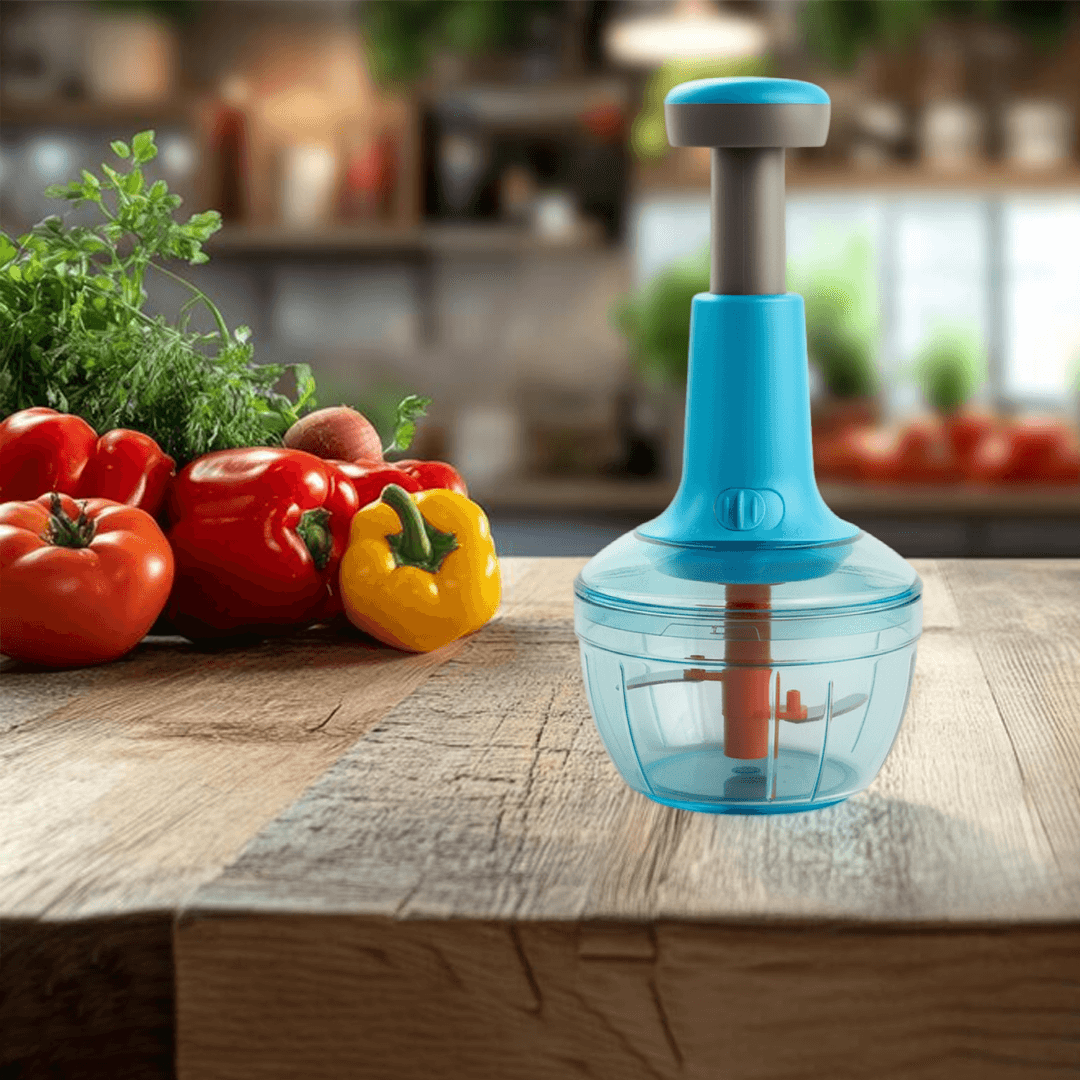
"Which chopper should I buy?" sounds like it should have one obvious answer, but the right choice really depends on three things: what you cook most, how much you prep at once, and how much counter or storage space you're working with. Skipping this step is how people end up with a chopper that's technically fine but never quite matches how they actually cook.
This guide walks through the decision in order — starting with your cooking habits, not the product spec sheet — so you land on a tool you'll actually reach for daily instead of one that ends up at the back of a cabinet.
Ready to shop this guide?
Shop the Manual Push Vegetable ChopperStep 1: Identify your most frequent cut, not your occasional one
Most people underestimate how much a single, frequent task dominates their actual prep time. If you cook Indian meals regularly, that task is almost always finely chopped onion and tomato for a masala base — which is precisely what the Manual Push Vegetable Chopper is built for. Its vertical push mechanism dices vegetables inside an enclosed, transparent container, so onions and tomatoes go from whole to chopped in a few presses.
If your most frequent task is actually something else — say, potato sticks for fries, or thin slices for salads — the right first purchase is a different tool entirely, even if it's less commonly recommended as a "starter" chopper. Buy for your Tuesday-night dinner, not your once-a-month recipe.
Step 2: Match capacity to your typical batch size
A single-person or couple's kitchen chopping one or two onions at a time has very different needs from a household prepping for five or six people nightly. The container size on a push chopper determines how much you can process before you need to empty it and start again — worth checking against your usual batch before buying, since a container that's too small just means more refills, not a tool that doesn't work.
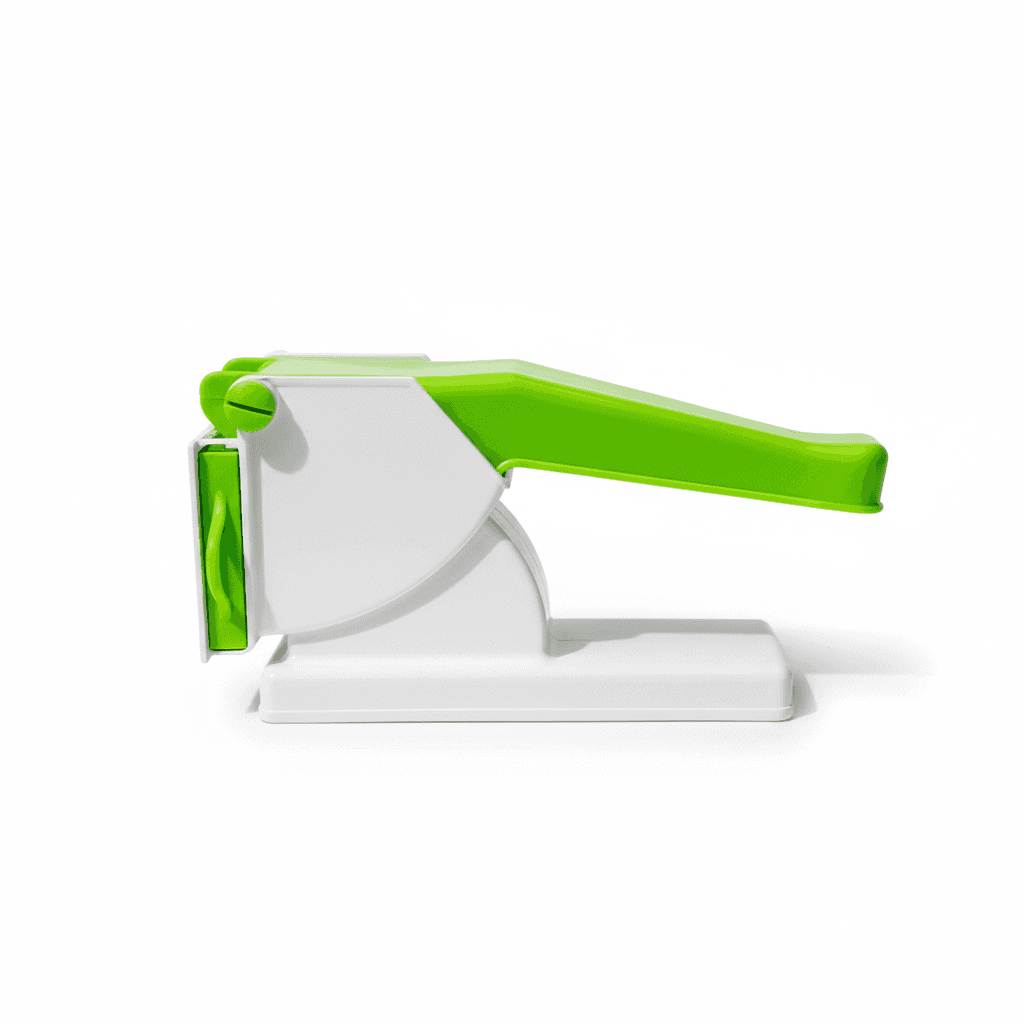
If you regularly cook in bulk — batch-cooking for the week, or feeding a large family — pairing a chopper with a grid-blade cutter for sticks and cubes, like the one in the Manual Potato Cutter / French Fries Maker, spreads bulk prep across two tools rather than overloading one.
Step 3: Decide between a standalone tool and a combo set
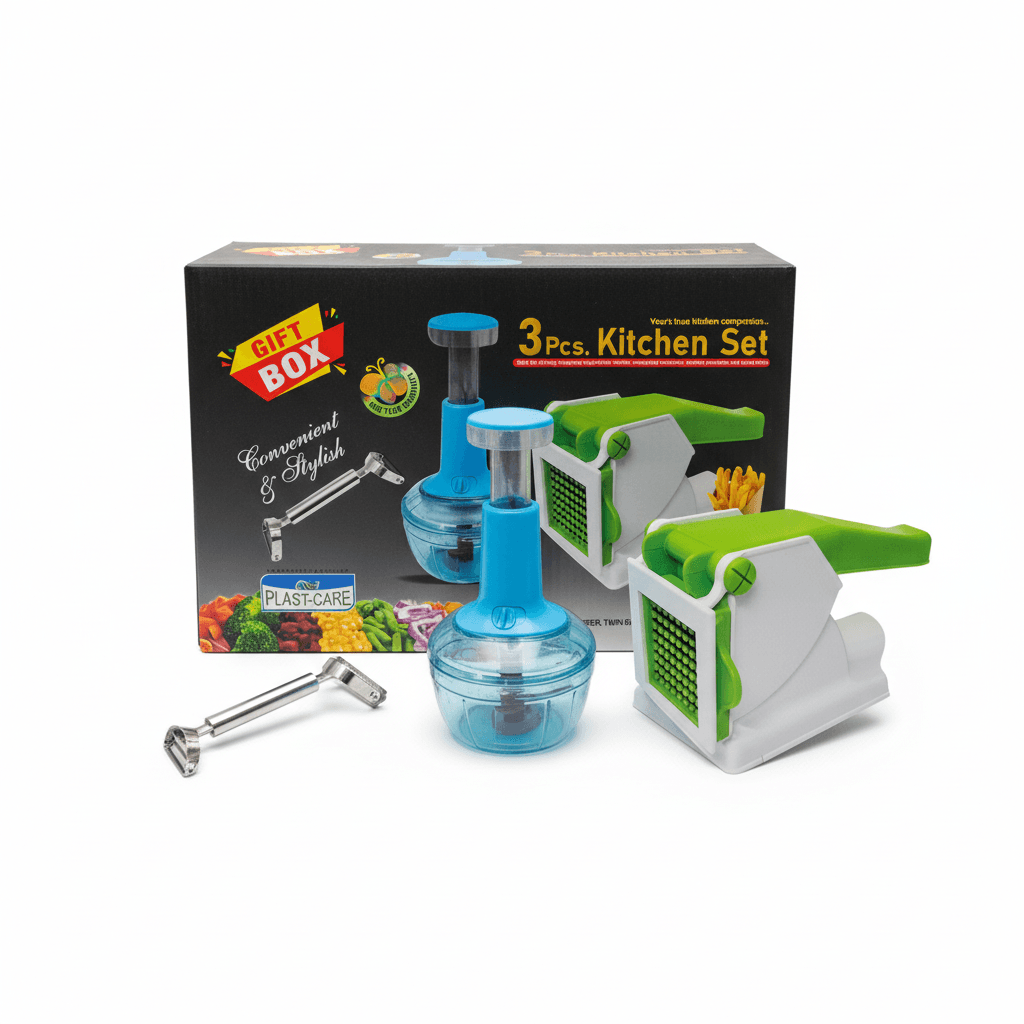
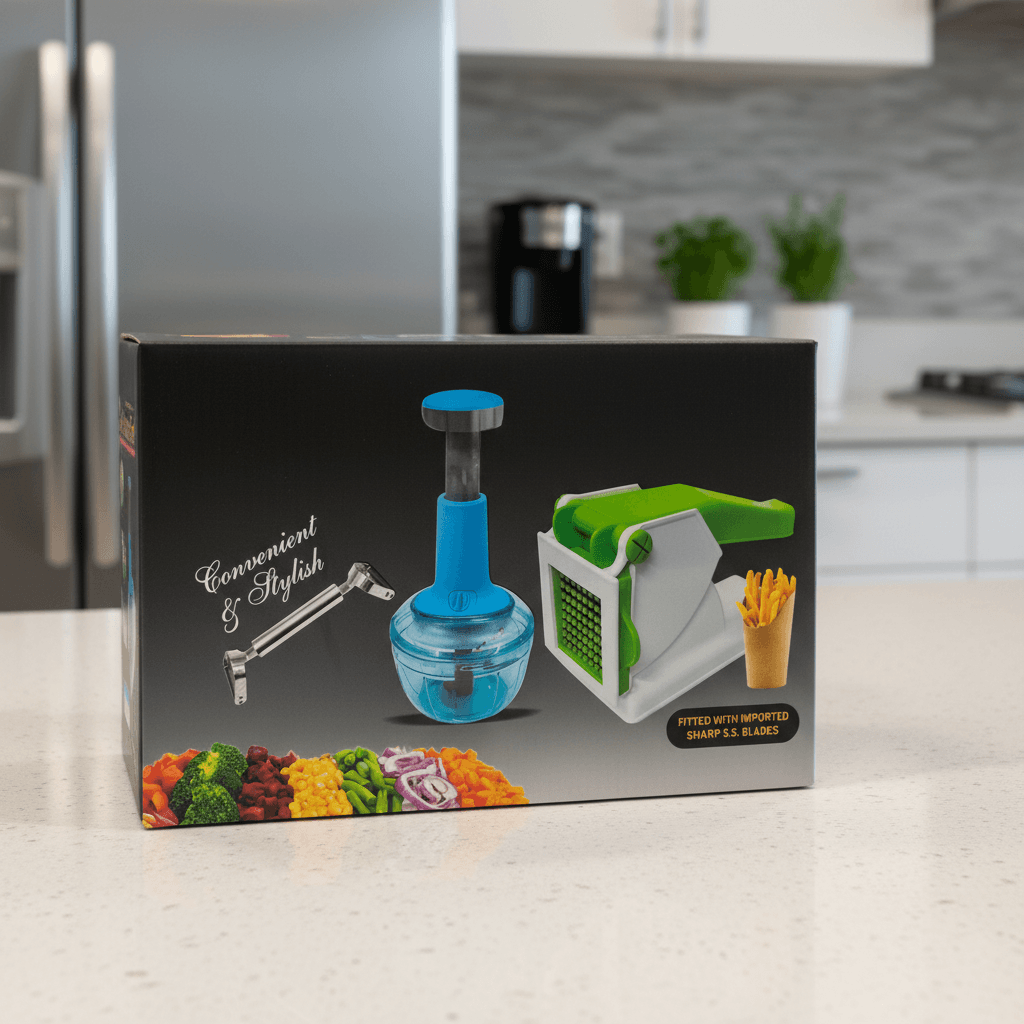
If you're building a prep station from nothing, a combo set removes the guesswork. The 3 Pcs Manual Kitchen Tool Set bundles a push chopper, a hand-operated cutter, and a peeler — a reasonable single purchase for a first kitchen or a gift.
If you already own some prep tools and specifically need a chopper, buying the Manual Push Vegetable Chopper on its own avoids paying for peelers or cutters you don't need duplicates of.
Step 4: Check the practical details
- Blade material — stainless steel resists rust and stays sharper over repeated use than lower-grade alternatives.
- Whether the container is transparent — being able to see chop size as you press matters more day-to-day than it sounds.
- How easily it disassembles for cleaning — an enclosed blade mechanism should still come apart fully for a proper rinse.
- Handle height and grip — a tall push handle reduces strain if you're chopping for a while, versus a short one that forces a more awkward wrist angle.
When a chopper isn't actually the right tool
It's worth saying plainly: if your kitchen mostly needs thin, even slices — for salads, garnishes, or chip-style snacks — a flat slicer like the Multipurpose Stainless Steel Slicer with Holder & Julienne Blade will serve you better than a dice-focused chopper ever will, no matter how good the chopper is. And if fries or vegetable sticks are the recurring task, the grid-blade Manual Potato Cutter outperforms a chopper at that specific job.
The honest answer to "which chopper should I buy" is often "the one that matches your most frequent cut style" rather than the most feature-packed option on the page.