Common Mistakes to Avoid When Grilling on a Stovetop Barbeque Stand
A stovetop BBQ stand is a simple setup, but a handful of avoidable mistakes account for most of the frustrating results people report — sticking, uneven charring, or an unstable stand. Here's what to watch for.
Ready to shop this guide?
Shop the Folding BBQ Stand with SkewersMistake 1: Not preheating the surface
Placing food directly onto a cold or barely-warm mesh surface is the most common cause of sticking. Give the stand a minute or two on low-to-medium flame before adding anything — a properly heated surface sears food's outer layer faster, reducing sticking and improving texture.
Mistake 2: Overcrowding the skewers or grill surface
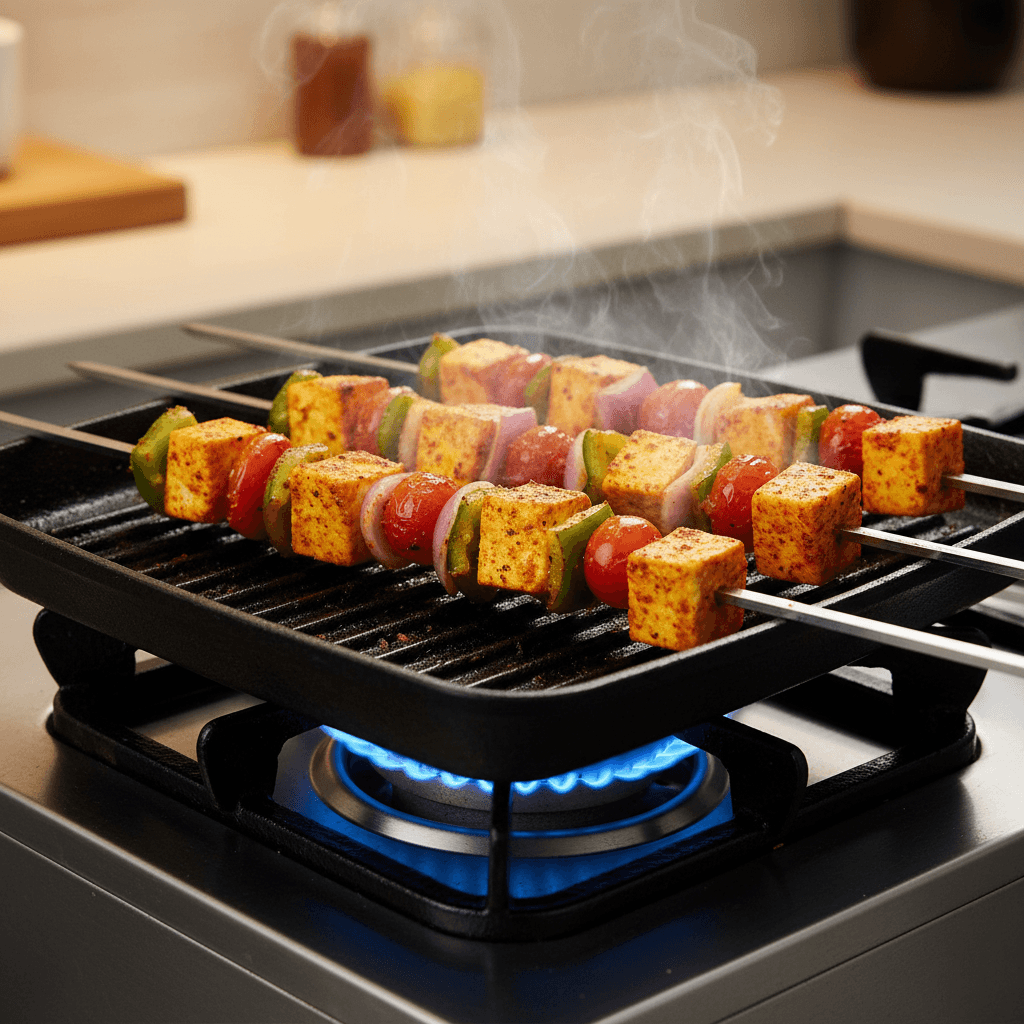
Packing pieces of paneer or meat tightly together prevents heat from reaching all sides evenly, since pieces pressed against each other block airflow and direct heat contact at those points. Leaving small gaps between pieces produces noticeably more even cooking.
Mistake 3: Using round skewers and fighting food spinning
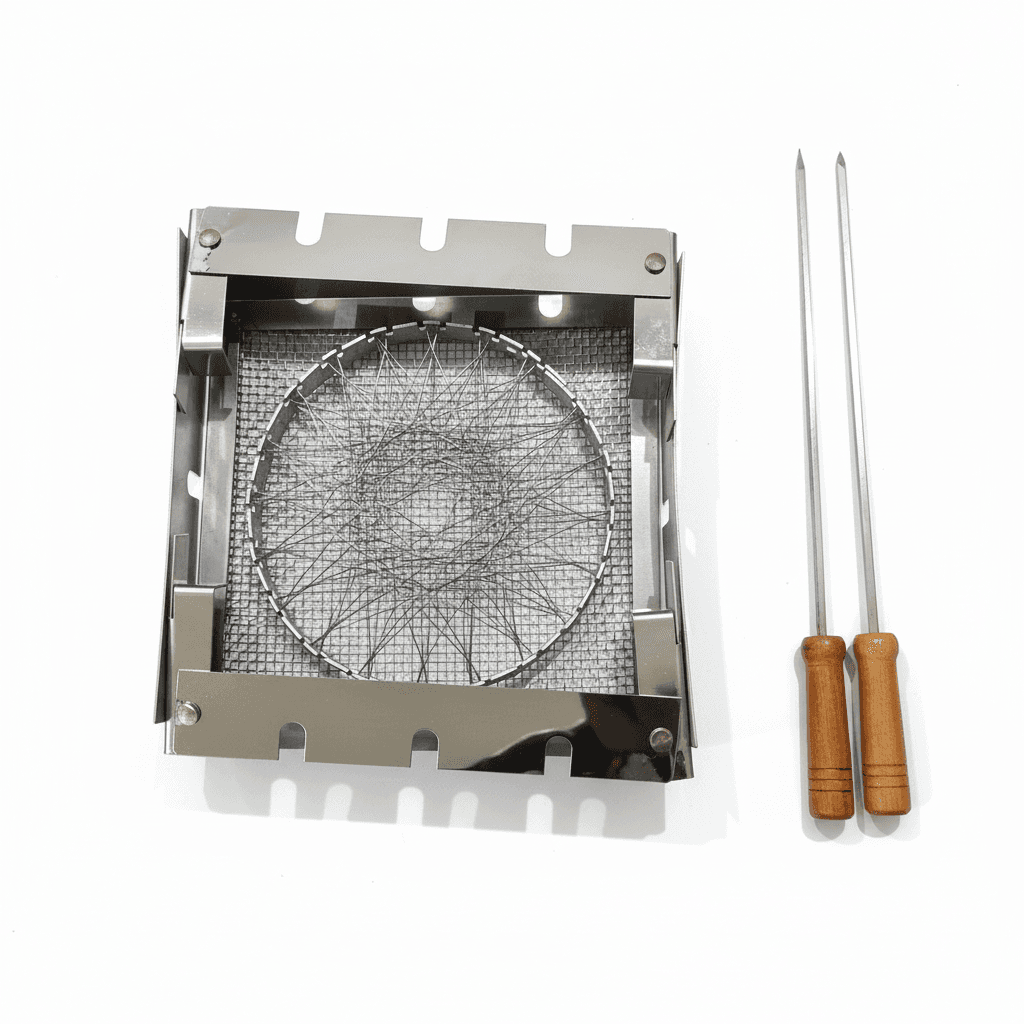
Round skewers let food rotate freely rather than turning with the skewer, which is one of the most common frustrations in home grilling. Flat-blade skewers, like the Stainless Steel BBQ Skewers with Wooden Handle, solve this directly by giving food something to grip rather than spin around.
Mistake 4: Not checking the stand is fully unfolded and stable
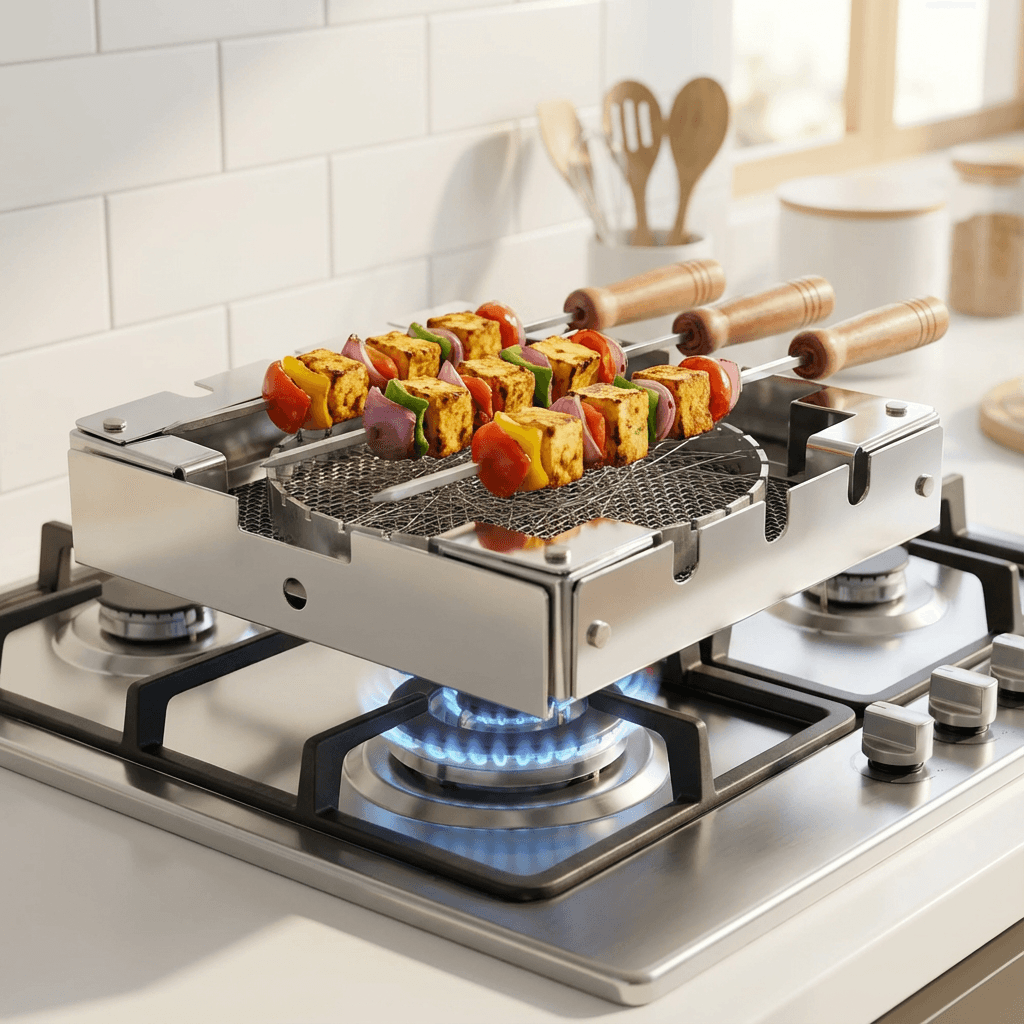
A partially unfolded stand, or one seated unevenly on the burner, creates an unstable grilling surface — a real safety concern once you're handling hot food and skewers. Always confirm the frame is fully locked open and sitting level before lighting the burner.
Mistake 5: Leaving the flame on high throughout
A constant high flame chars the outside of food faster than the inside can cook, especially with thicker pieces of paneer or meat. Adjusting the flame down partway through — one of the real advantages gas has over charcoal — produces more even results than leaving it on one setting for the whole session.
Mistake 6: Using a marinade that's too thin
A very watery marinade doesn't cling to food during grilling and can cause more dripping onto the flame, leading to flare-ups and uneven charring. A slightly thicker marinade with some oil content coats food more evenly and helps develop a better sear on the mesh surface without excessive flare-up.
Mistake 7: Neglecting cleanup until the stand has fully cooled unattended
It's tempting to leave a used stand sitting until it's convenient to clean, but stainless steel that's left with food residue for extended periods is more prone to staining and buildup than one wiped down soon after cooling. Waiting for it to be safe to handle is correct, but don't stretch that into leaving it uncleaned for hours or days afterward.
Mistake 8: Not accounting for your specific stove's flame strength
Gas stoves vary meaningfully in flame output, and a flame setting that works well on one stove can run noticeably hotter or cooler on another. Treating a general flame recommendation as an exact setting, rather than a starting point to calibrate from, is a common source of inconsistent results between different kitchens or even different burners on the same stove. Spend your first session or two on a new stove paying close attention to how quickly the mesh heats and how fast food chars, and adjust your usual flame setting accordingly.
Mistake 9: Assuming all skewer positions on the stand cook at the same rate
Depending on your burner's flame pattern, some areas of the mesh surface may run slightly hotter than others — often the center, directly above the flame, compared to the edges. Rotating skewers between positions partway through grilling, not just turning them in place, helps even out this variation rather than leaving the same skewer in the hottest spot for the entire session.
Quick fixes summary
- Sticking → preheat the surface for a minute or two before adding food.
- Uneven cooking → leave gaps between pieces rather than crowding the grill.
- Food spinning on skewers → switch to flat-blade skewers.
- Wobbly setup → confirm the stand is fully unfolded and seated level before lighting.
- Charred outside, undercooked inside → lower the flame partway through rather than leaving it on high.