How to Choose Between a Tabletop and Vacuum-Base Dry Fruit Cutter
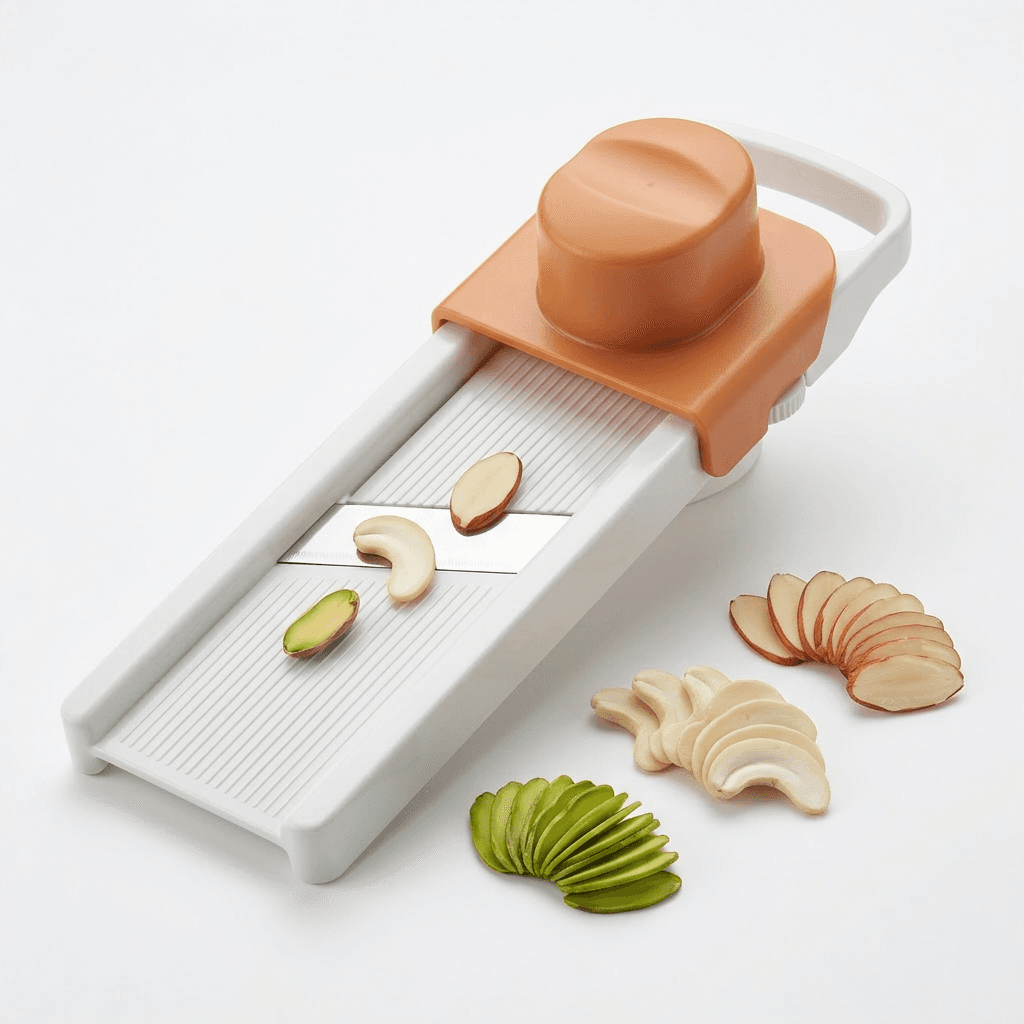
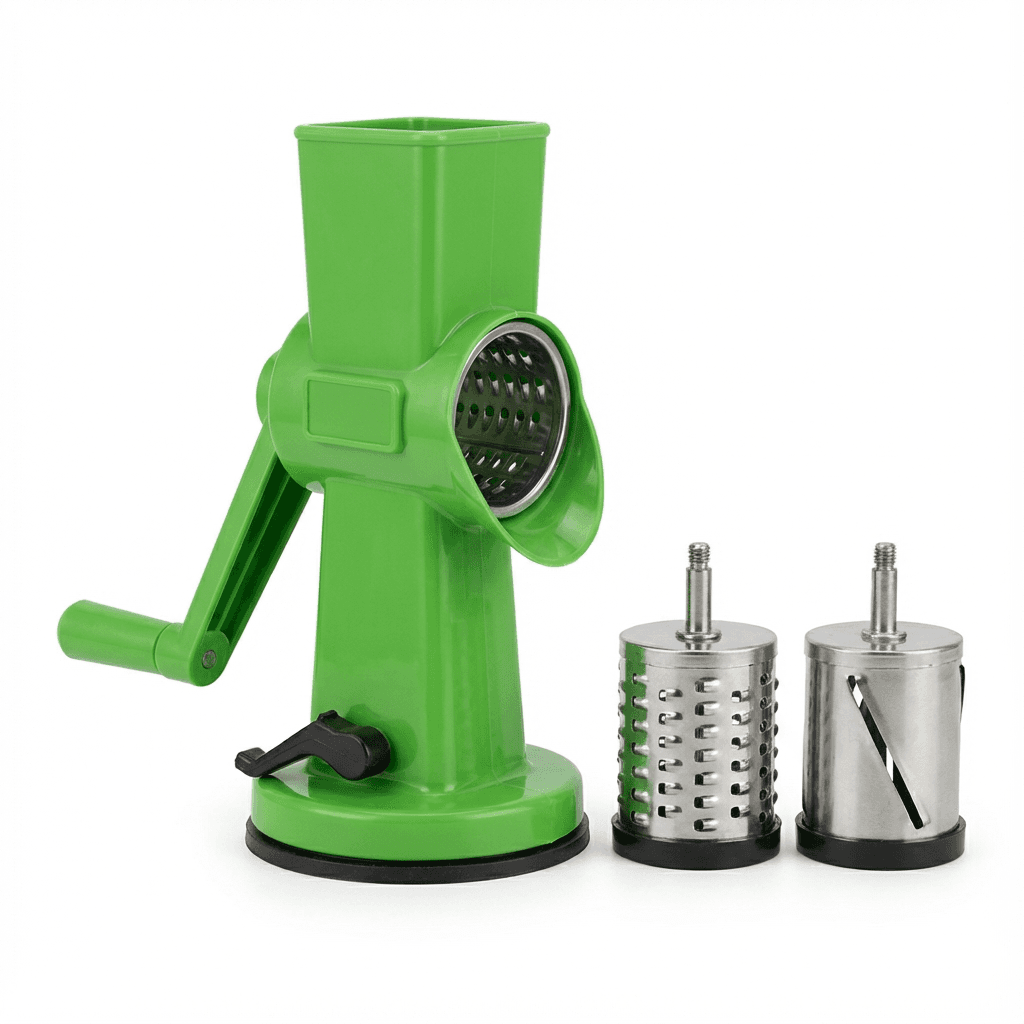
PlastCare carries two distinct dry fruit cutters, and the difference isn't just cosmetic — they use different mechanisms aimed at slightly different jobs. The Dry Fruit Cutter & Slicer is a tabletop design with a flat slicing surface, while the Nut & Dry Fruit Cutter with Slicer uses a rotating handle over a stainless steel drum blade with a vacuum base that grips the counter.
If you've been unsure which one actually suits your kitchen, this comes down to two things: how you prefer to operate the tool, and how much stability you need during use.
Ready to shop this guide?
Shop the Tabletop Dry Fruit Cutter & SlicerThe tabletop design: flat surface, direct control
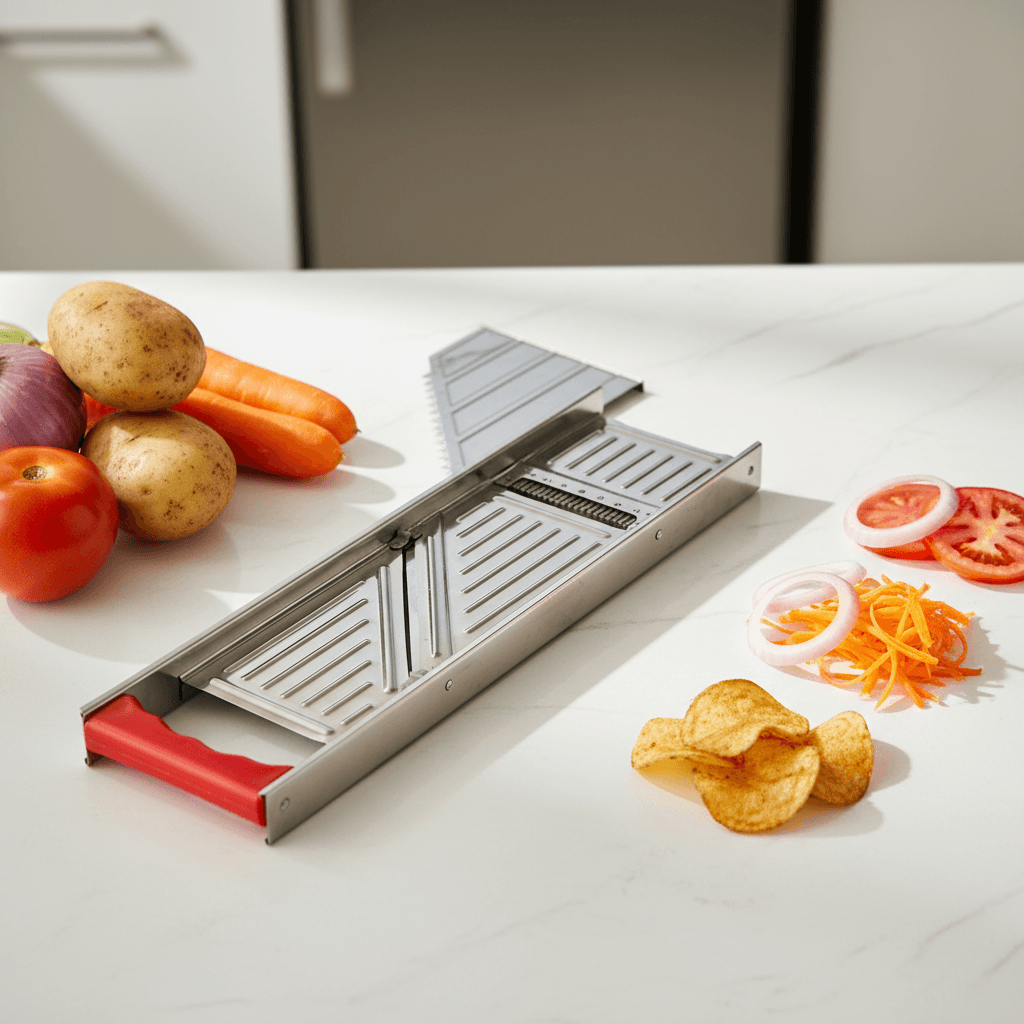
The Dry Fruit Cutter & Slicer uses a flat slicing surface with a sharp internal blade and a top grip. You press dry fruits across the surface under controlled pressure, and the enclosed blade design guides them smoothly to produce neat, even pieces without crushing. It's a compact, tabletop unit — light enough to pick up, use on a counter or table, rinse, and put away in a drawer.
This design suits people who want a simple, direct motion — press and slice — without needing to mount or clamp anything to the counter first. It's especially convenient for smaller kitchens or for occasional use, like garnishing sweets during a festival or dessert prep, where you want something that's ready in seconds.
The vacuum-base design: rotating handle, hands-free stability
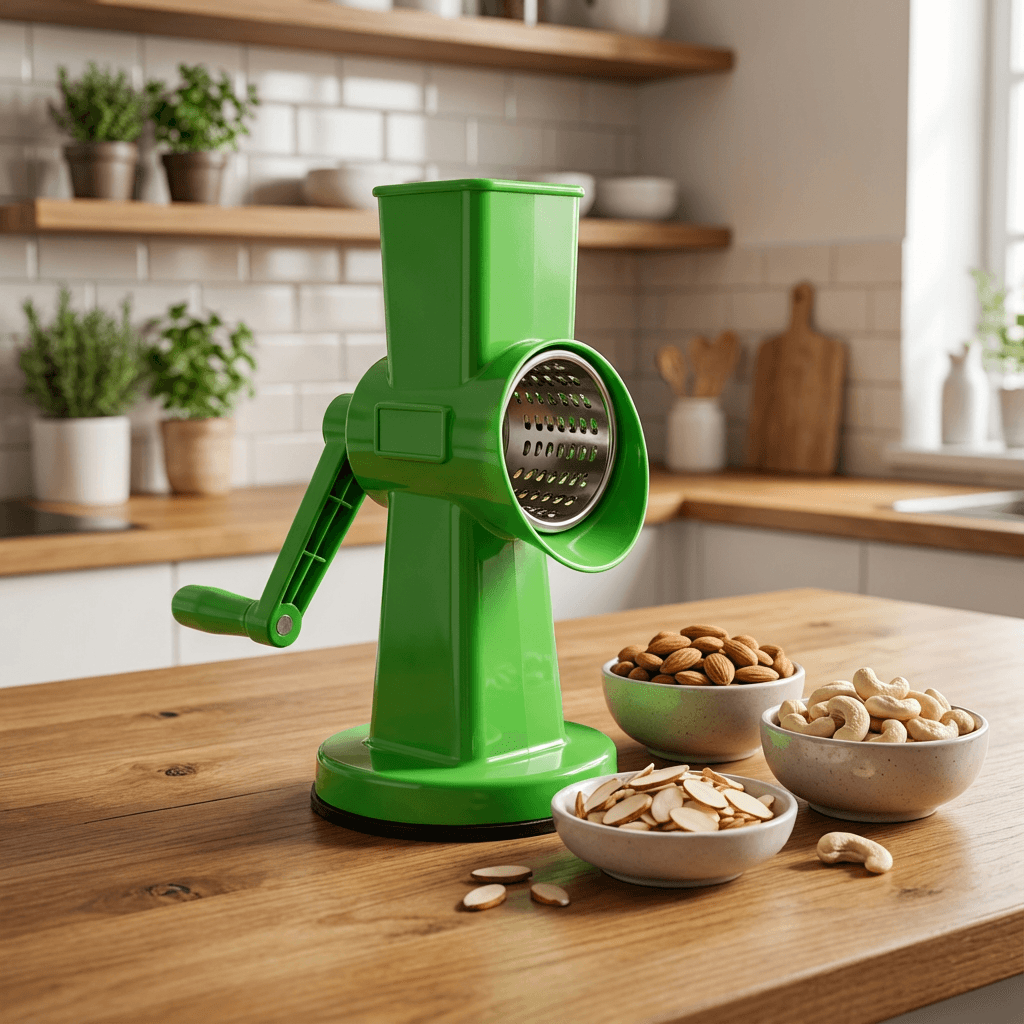
The Nut & Dry Fruit Cutter with Slicer works differently: it's operated with a smooth rotating handle over a stainless steel drum blade, and its vertical design includes a vacuum base that grips firmly to the countertop. That base is the key difference — because the unit is anchored, it won't shift or slide while you're cranking the handle, which matters if you're cutting a larger quantity in one sitting.
A wide top hopper makes it easy to keep feeding in ingredients without stopping, and the enclosed cutting mechanism keeps your hands away from the blade throughout. This is the better fit if you're preparing dry fruits in bigger batches — festival sweets, bulk garnishing for catering-scale cooking, or repeated use across a session — where hands-free stability saves real time and effort over many repetitions.
Cost and long-term value considerations
The tabletop cutter is generally the more accessible entry point, both in price and in how immediately usable it is — there's no setup beyond placing it on a counter. The vacuum-base cutter represents a slightly larger investment, but for anyone who cuts dry fruit regularly and in real volume, the time saved across many uses over its lifespan tends to justify the difference, especially for households that host frequently or prepare festival sweets more than once a year.
It's worth thinking about this the same way you would any tool upgrade — not whether the more capable option is objectively better, but whether your actual usage pattern is frequent and high-volume enough to benefit from what it does differently.
Side-by-side comparison
- Mechanism: tabletop uses a press-and-slide motion; vacuum-base uses a rotating crank handle.
- Stability: tabletop relies on a sturdy body and your grip; vacuum-base anchors itself to the counter.
- Best for: tabletop suits quick, occasional cutting; vacuum-base suits larger or repeated batches.
- Footprint: tabletop is more compact and portable; vacuum-base is a fixed, vertical unit while in use.
- Both: use stainless steel blades, avoid crushing dry fruits, and clean up easily after use.
Which one fits your kitchen
If you cut dry fruits occasionally — garnishing a dessert here and there, or a handful of cashews for a snack — the tabletop cutter's simplicity and portability make it the easier daily tool. If you regularly prepare dry fruits in larger quantities, especially around festival seasons when sweets and gift boxes are being made in bulk, the vacuum-base cutter's stability and continuous-feed hopper will save noticeably more effort over a long prep session.
Some households end up finding a use for both — the tabletop for everyday garnishing, and the vacuum-base version brought out specifically during high-volume festive cooking. Neither replaces the other; they're built for different scales of the same task.