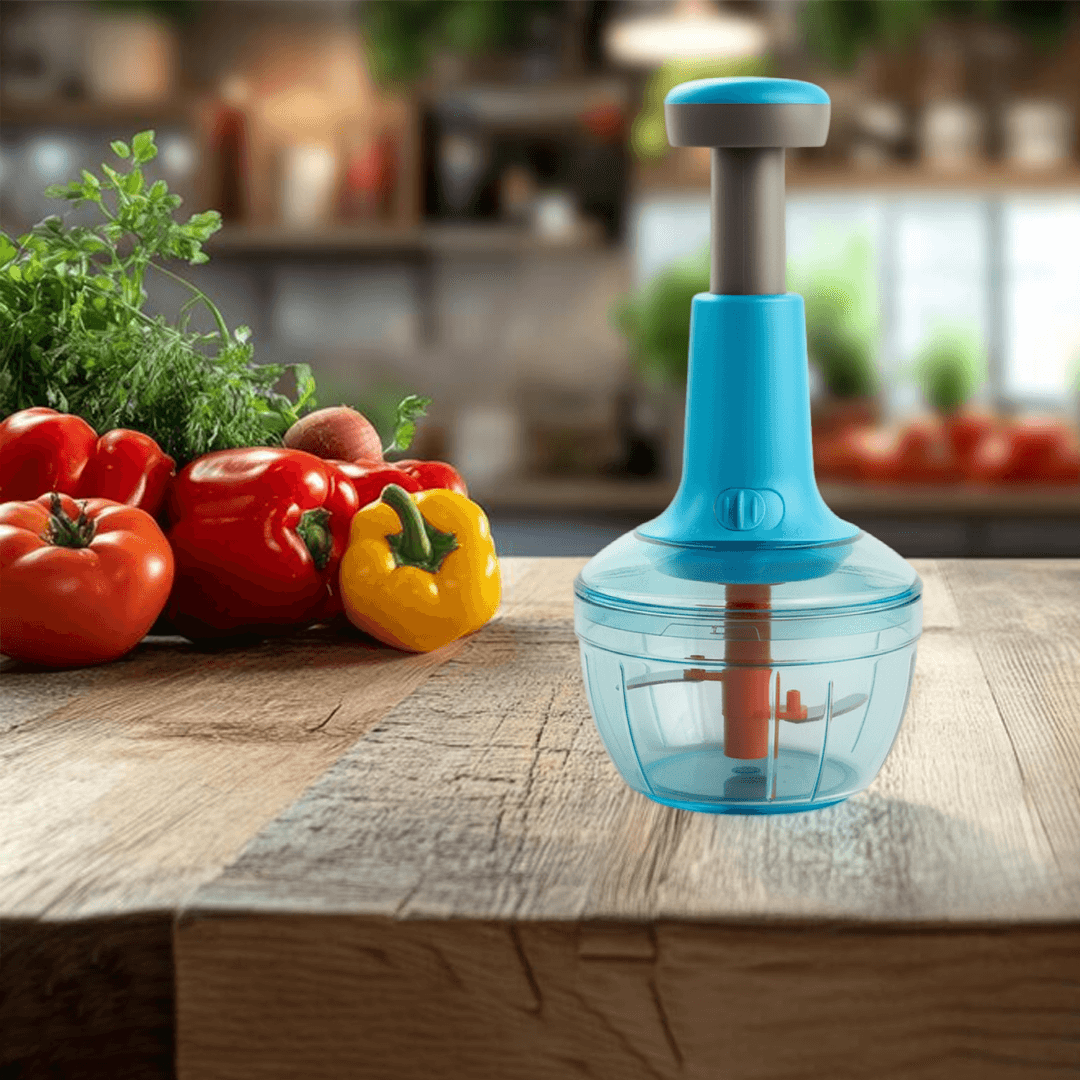
How to Clean a Manual Vegetable Chopper Without Damaging the Blades
A manual chopper is one of the easier kitchen tools to clean properly — no motor, no electrical parts to avoid soaking — but the enclosed blade mechanism still means a quick rinse isn't quite the same as a proper clean. Here's the routine that keeps both the container and the blade in good shape long-term.
Ready to shop this guide?
Shop the Manual Push Vegetable ChopperStep 1: Disassemble before washing
Separate the transparent container, the lid, and the blade assembly before washing anything. Trying to clean a chopper as one assembled unit almost always leaves residue trapped around the blade's pivot point, which is exactly where buildup causes the most problems over time.
Step 2: Rinse immediately, before residue dries
Vegetable residue is far easier to rinse away fresh than after it's had time to dry onto the blade or container walls. If you can't do a full wash right away, at minimum rinse each disassembled part under running water to stop residue from setting.
Step 3: Wash with mild soap and a soft sponge
Use a soft sponge or cloth with mild dish soap rather than an abrasive scrubber — steel wool or harsh scouring pads can scratch the blade's surface and the container's transparency, both of which degrade the tool's performance and appearance over time.
Pay particular attention to the blade's pivot and mounting point, where fibrous residue from onions, herbs or capsicum tends to accumulate. A soft brush (an old toothbrush works well) can reach into this area more effectively than a sponge alone.
Step 4: Rinse thoroughly and dry completely
Rinse all soap residue off each part, then dry everything thoroughly with a cloth before reassembling. Leaving any part — especially the blade assembly — to air-dry while still wet increases the chance of water spots or, over a long period, the beginnings of corrosion at the blade's mounting point.
Dealing with strong odors from onions and garlic
Onion and garlic residue can leave a lingering smell in the container even after a normal wash, since their natural oils cling to surfaces more than most vegetable residue. A brief soak in warm water with a small amount of lemon juice or vinegar, followed by the normal wash routine, helps neutralize odor more effectively than soap alone — just make sure to rinse thoroughly afterward so no acidic residue is left sitting on the blade's metal surfaces.
Dealing with staining from turmeric and colorful vegetables
Turmeric, beetroot and similarly pigmented ingredients can leave visible staining on a transparent container that regular washing doesn't fully remove. Rinsing immediately after use, before the pigment has a chance to set, is the most effective prevention. For existing stains, a short soak in a solution of baking soda and water, left for ten to fifteen minutes before washing normally, lifts most residual staining without needing an abrasive scrub that would scratch the surface.
How often a full clean is actually needed
For daily use, a full disassembly and wash after each use is the ideal routine, though a thorough rinse of all parts is the minimum acceptable standard if a full wash isn't practical in the moment. What should be avoided is stretching multiple uses between proper cleans — residue compounds over repeated uses, and what starts as a quick five-minute clean becomes a much more involved scrubbing job if left for several days.
What to avoid
- Don't soak the blade assembly for extended periods — a quick wash is sufficient and safer for the mechanism.
- Don't use steel wool or abrasive scouring pads on the container or blade surface.
- Don't reassemble while parts are still wet — dry fully first.
- Don't force the blade assembly back together if it doesn't seat smoothly — check for residue preventing a clean fit.