Manual Kitchen Chopper FAQs: Safety, Blades, and Everyday Use
Manual choppers are simple tools, but a handful of questions come up repeatedly from first-time buyers — mostly around safety, capacity, and what they're actually good at. Here are direct answers to the ones we hear most.
Ready to shop this guide?
Shop the Manual Push Vegetable ChopperSafety and handling
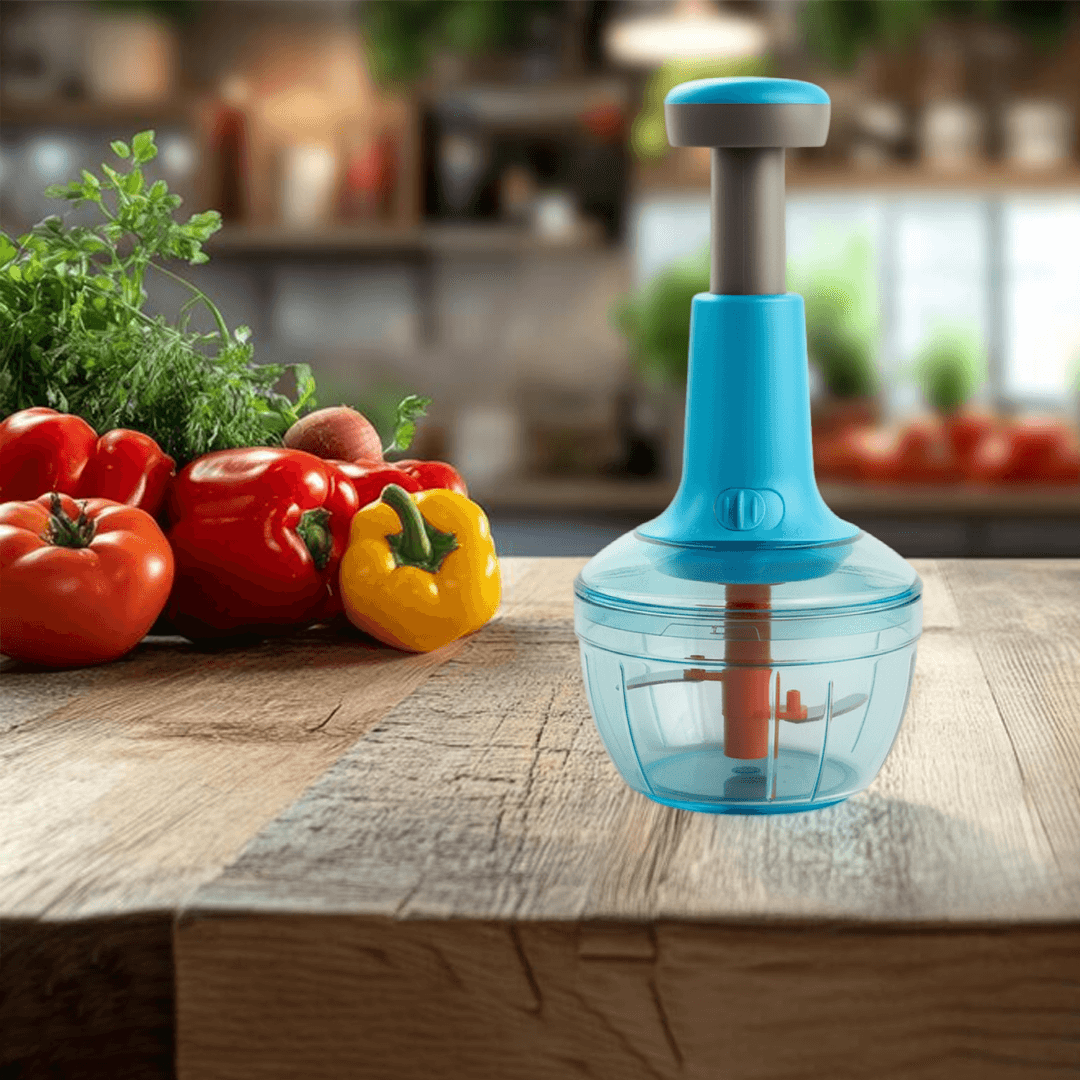
The enclosed blade design of the Manual Push Vegetable Chopper is one of its main safety advantages over a knife — the rotating blade stays inside the container throughout use, and your hand only ever contacts the push handle, not the cutting edge. That said, care is still needed during disassembly and cleaning, when the blade is briefly exposed.
Keep the chopper on a stable, flat surface while in use rather than holding it at an angle, and avoid overfilling the container past its recommended capacity, since an overloaded chopper can require uneven pressure that increases the chance of the container shifting mid-press.
Capacity and batch size
A single chopper load typically handles a moderate batch — a couple of onions or a similar volume of other vegetables — rather than being designed for large-scale bulk prep in one go. For bigger batches, processing in a few rounds, emptying and reloading between each, gives more even results than trying to force one very large load through at once.
If you regularly cook for a large household or entertain often, it's worth planning for multiple rounds as part of your normal prep workflow rather than treating it as an inconvenience — most manual choppers, including this one, are built around moderate per-load capacity by design, since a smaller enclosed container is part of what keeps the chopping motion controlled and even.
What it can and can't replace
A push chopper is built specifically for dicing — onions, tomatoes, capsicum, carrots and similar produce into fairly uniform small pieces. It isn't the right tool for thin, even slices (a job for a flat slicer) or long uniform sticks for fries (a job for a grid-blade cutter). Understanding this upfront avoids the disappointment of trying to force one tool into a job a different tool in the range handles far better.
Within its intended job, though, it genuinely replaces a knife and cutting board for most everyday dicing tasks, and does so with less mess since everything stays contained inside the chopper's bowl rather than spreading across a board.
Storage and longevity
Stored dry and disassembled (or at least loosely reassembled without pressure on the blade mechanism), a well-maintained chopper should hold up to years of regular use. The main factors that shorten a chopper's useful life are skipping the full disassembly during cleaning and using abrasive scrubbers that scratch the container or dull the blade's finish over time — both of which are avoidable with a consistent cleaning routine.