How to Maintain Stainless Steel Kitchen Tools So They Last for Years
Nearly every tool in PlastCare's manual kitchen range — the choppers, slicers, peeler, tongs, BBQ skewers and stand — is built from stainless steel specifically because it resists rust and holds up to repeated use better than lower-grade alternatives. But "rust-resistant" isn't the same as "maintenance-free." A handful of consistent habits are what actually separate tools that stay sharp and clean-looking for years from ones that dull, stain, or corrode early.
Ready to shop this guide?
Shop the Multifunctional Vegetable PeelerRinse immediately after use, every time
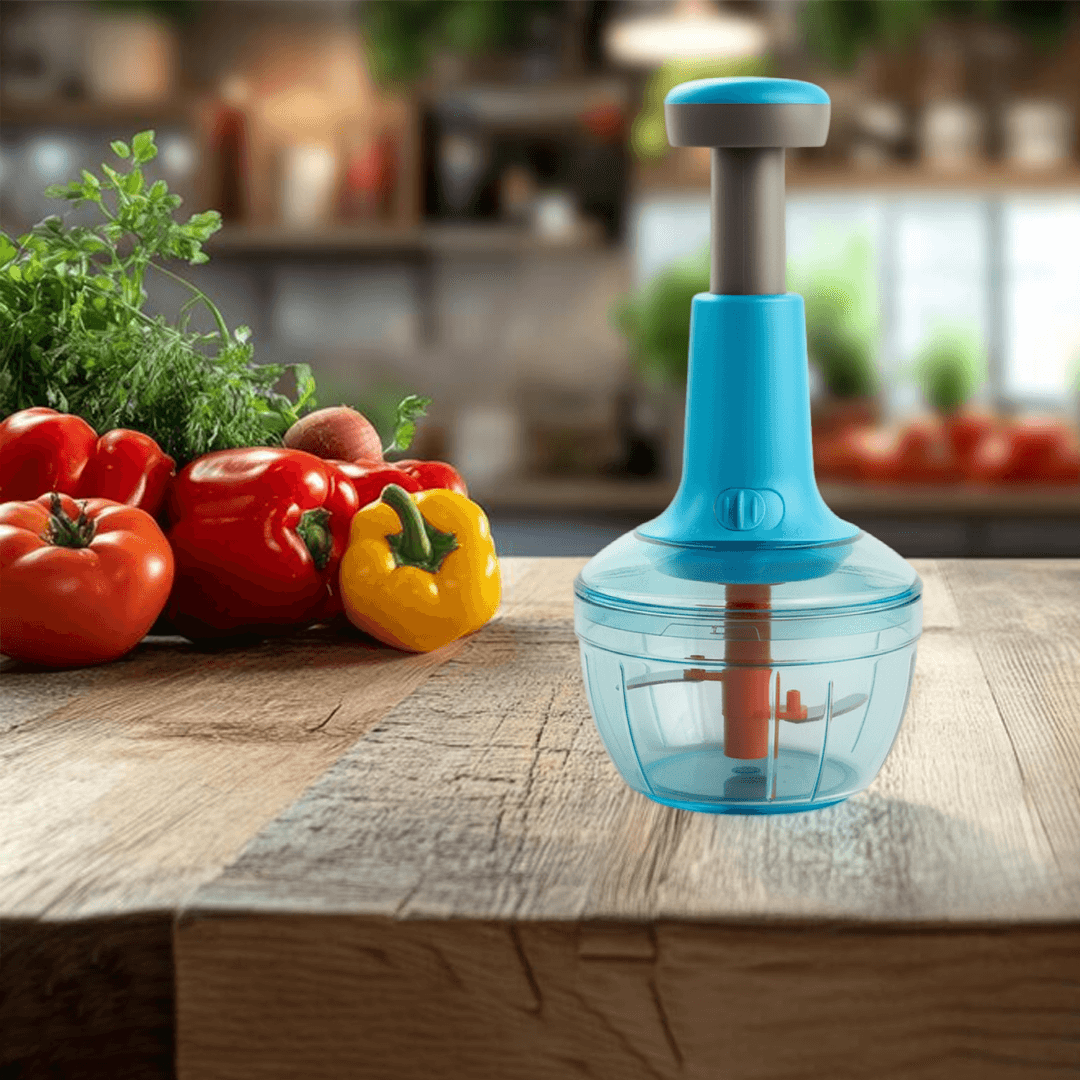
The single biggest factor in stainless steel longevity is how long food residue and moisture sit on the surface before being rinsed off. Acidic ingredients — tomatoes, onions, citrus — are especially worth rinsing promptly, since prolonged contact can dull the surface finish over repeated exposure. This applies across the range, from the Manual Push Vegetable Chopper's blade assembly to the Stainless Steel Serving Tong.
It doesn't need to be a full wash immediately — even a quick rinse under running water right after use, followed by a proper clean later, prevents most of the buildup that leads to long-term dulling or staining.
Dry fully before storing
Stainless steel is rust-resistant, not rust-proof, and standing water — especially in enclosed joints, hinges, or blade housings — is where corrosion is most likely to start over time. After washing, dry tools thoroughly with a cloth rather than letting them air-dry in a closed drawer where moisture lingers.
This matters especially for tools with folding or hinged parts, like the Folding Stainless Steel Barbeque Stand, where water can collect in joints that aren't immediately visible after a quick rinse.
Avoid abrasive scrubbers on polished surfaces
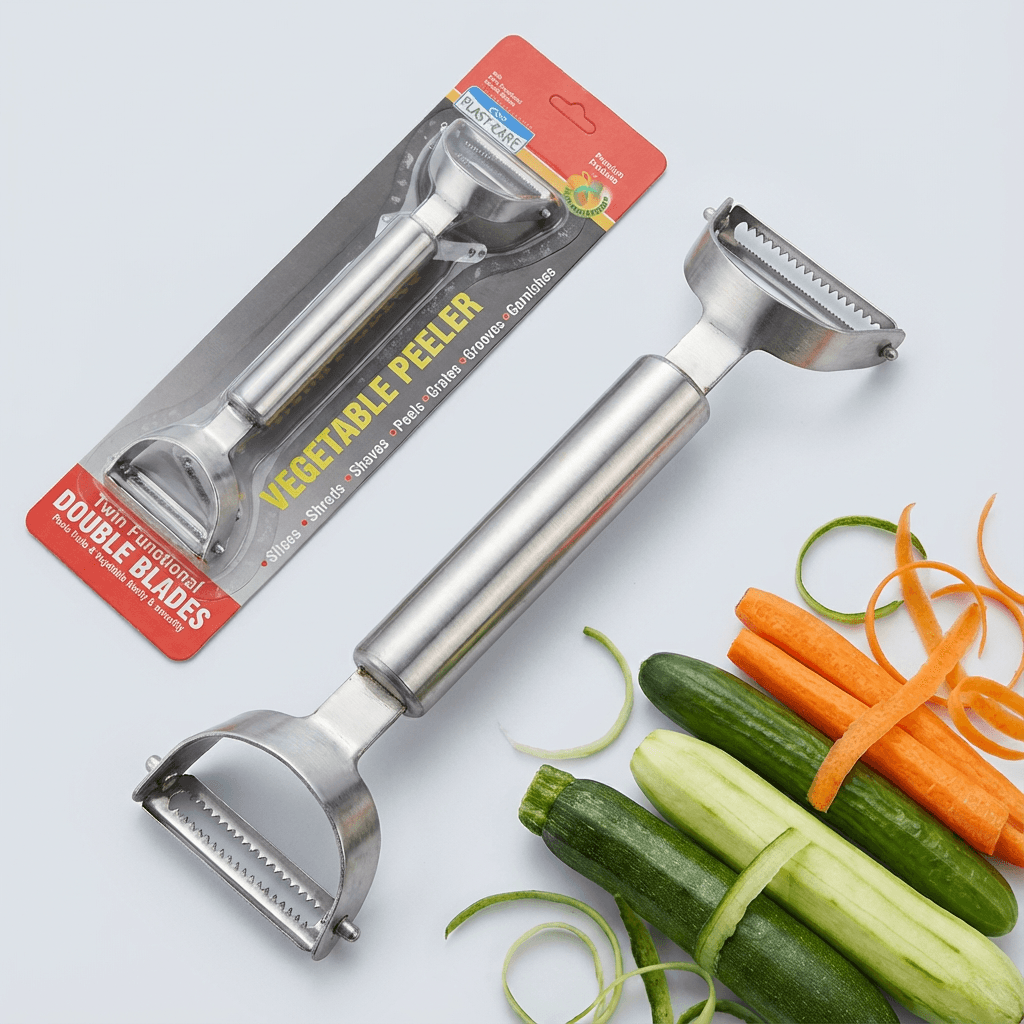
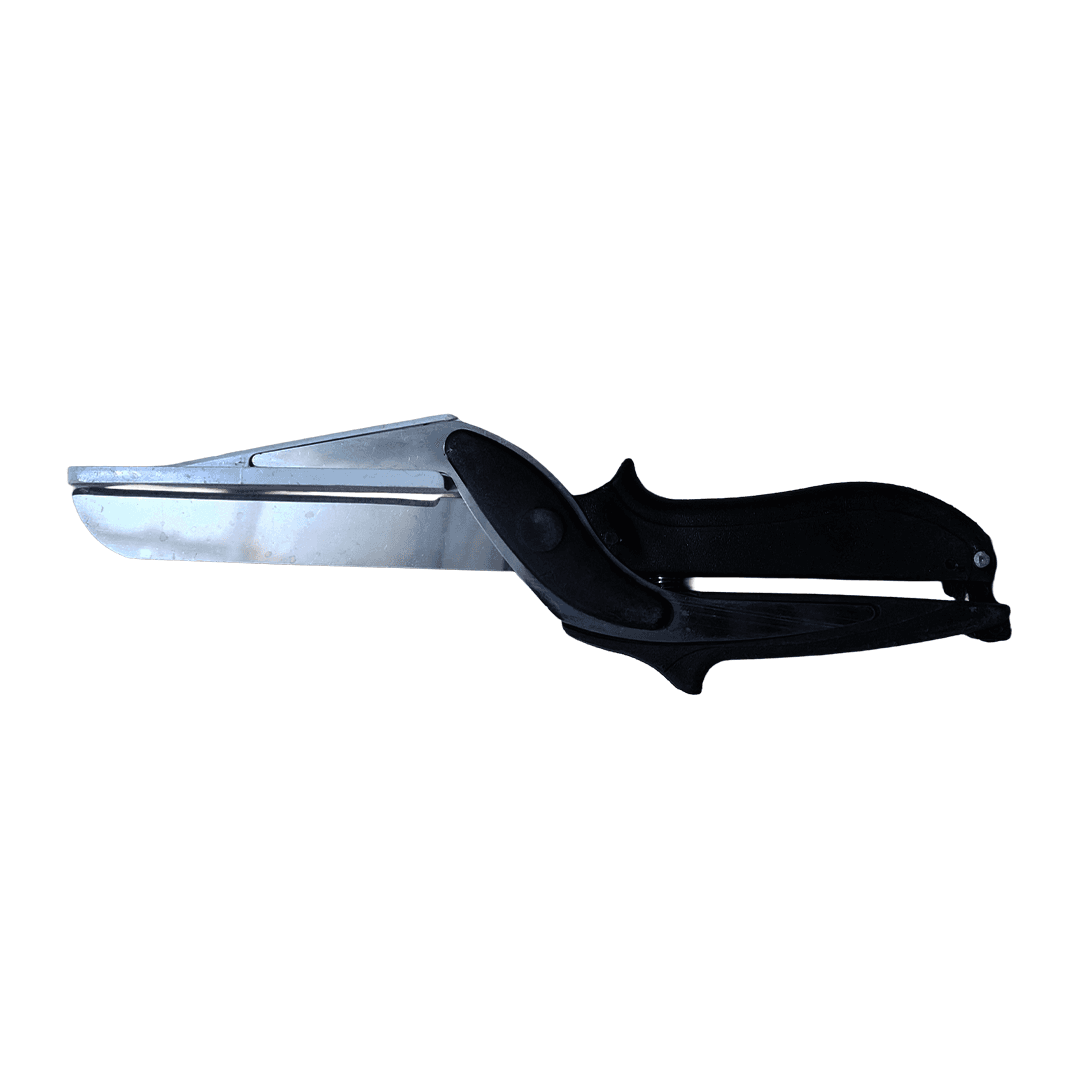
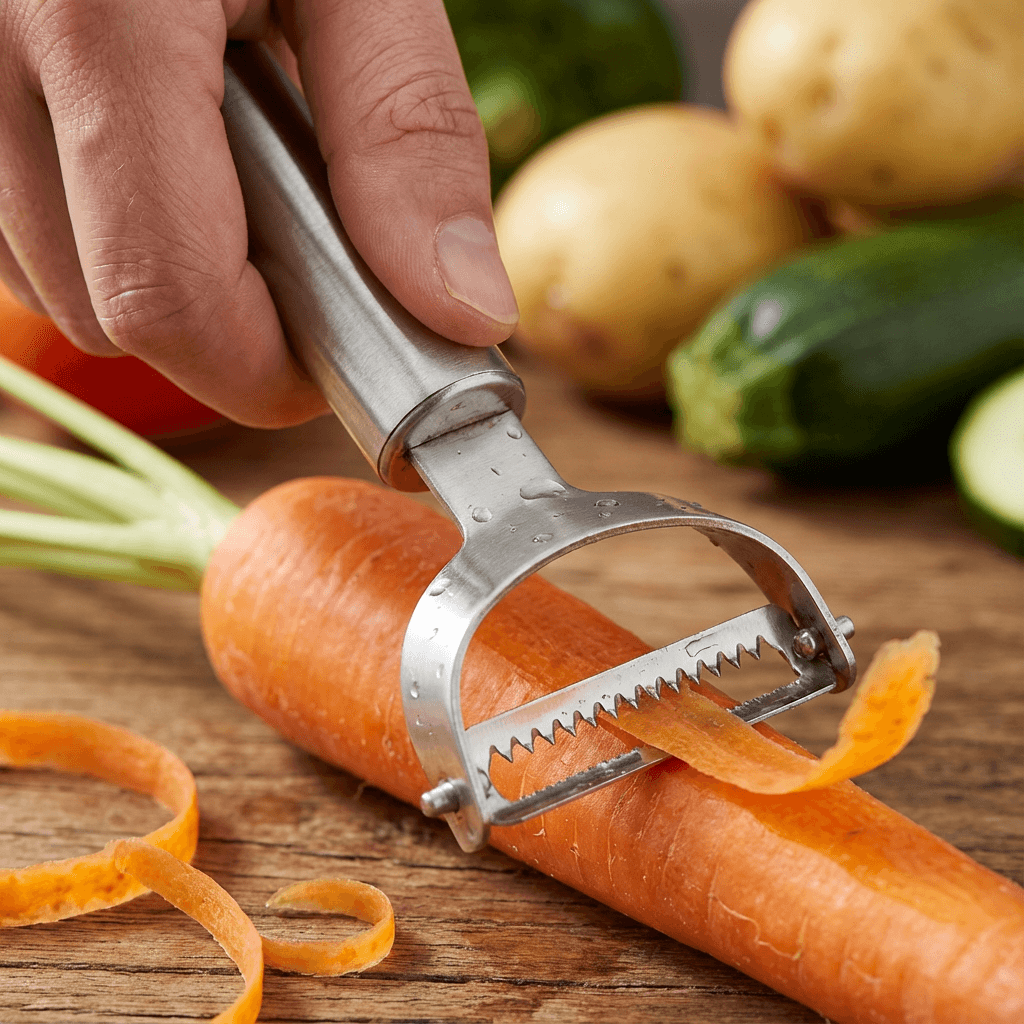
Steel wool and harsh abrasive scrubbers can scratch a polished stainless steel finish, and those fine scratches make the surface more prone to catching residue and staining over time — the opposite of what you want from a low-maintenance material. A soft sponge or cloth with mild dish soap is enough for routine cleaning on tools like the Multifunctional Stainless Steel Vegetable Peeler or the Multipurpose Slicer.
If a tool has stuck-on residue, soaking briefly in warm soapy water loosens it far more effectively than scrubbing harder — patience does less damage than force here.
Store blades and cutting edges protected
Blades that knock against other metal tools in a crowded drawer lose their edge faster than ones stored with a bit of separation. Where possible, store cutting tools like the julienne slicer or the vegetable peeler in a way that keeps their blade edges from direct contact with other hard items — a dedicated compartment, a drawer organizer, or simply laying them separately rather than tossed into a general utensil bin.
Understand the difference between surface marks and real damage
Light surface marks that appear with normal use — faint scratches from cutting boards or minor water spotting — are cosmetic and don't affect a tool's function or long-term durability. Genuine damage looks different: pitting, flaking, or discoloration that doesn't wipe away with normal cleaning. Learning to tell these apart helps avoid unnecessary worry over cosmetic wear while still catching the signs that actually warrant closer attention or eventual replacement.
Check moving parts periodically
Tools with mechanical parts — the rotating blade in a push chopper, the crank handle on the vacuum-base nut cutter, the folding hinges on the BBQ stand — benefit from an occasional check that everything still moves smoothly. Food residue built up around a hinge or rotation point is usually the culprit if a mechanism starts feeling stiffer than when it was new, and a thorough clean around that specific point typically resolves it.
A simple maintenance rhythm
- After every use: rinse promptly, especially after contact with acidic or oily ingredients.
- Weekly (for frequently used tools): a proper wash with mild soap, dried thoroughly before storage.
- Monthly: check hinges, rotating mechanisms and blade edges for residue buildup or early signs of dulling.
- As needed: avoid abrasive scrubbers; use soaking instead of force on stuck-on residue.